Rimalرمال
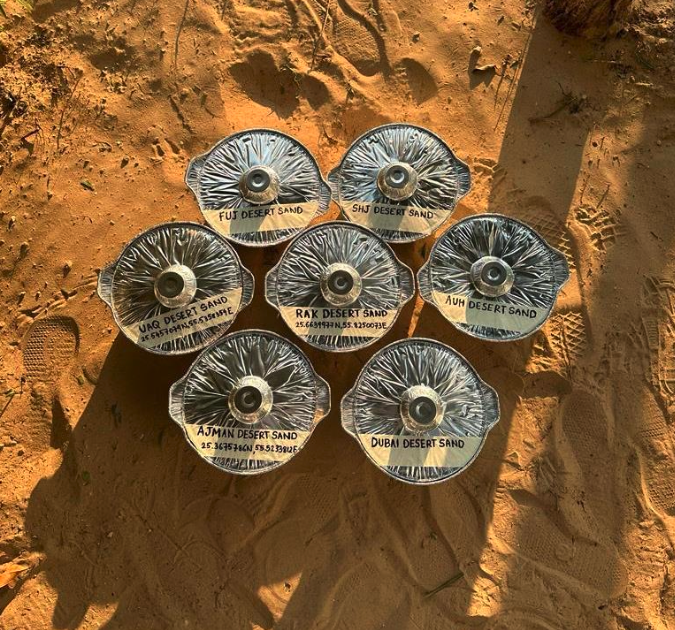
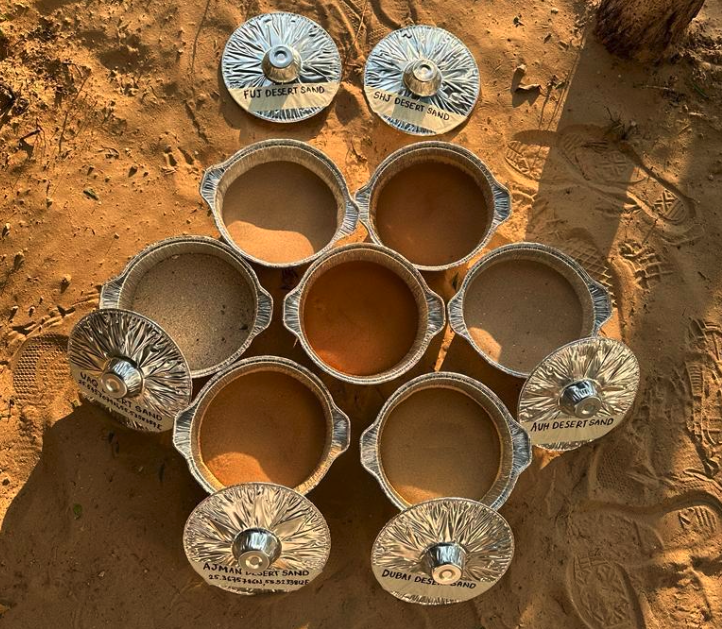
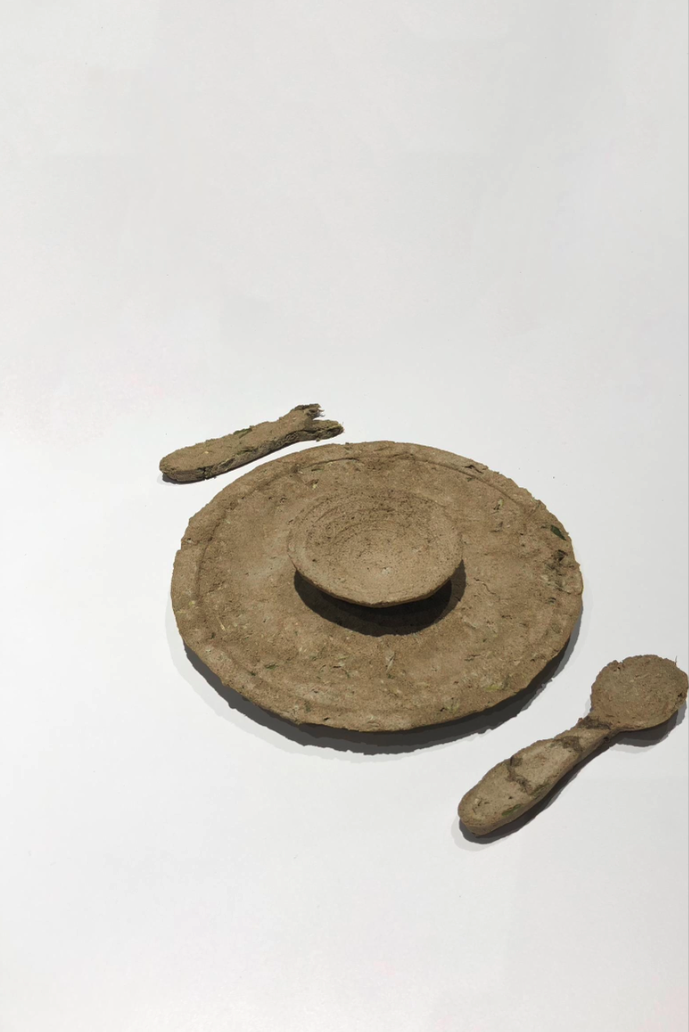
A biomaterial recipe and a small set of disposable tableware made from what we already have in the desert. Silica sand, the slime of okra as a binder, a squeeze of lime, an oven at 80°C. A plate, a bowl, a spoon, a fork, a knife. All of them break back down into sand when you're done with them.
The starting point
Sand is everywhere in the UAE. You can't walk a kilometre without finding more of it than you'll ever use. And yet the disposable plates and forks we throw at every catered event come from oil, travel thousands of kilometres, and don't break down for centuries after a single meal. The disconnect bothered us.
What if the disposable was actually made from the place? You eat off the desert, then the desert takes it back. We started looking for a binder that could glue sand into a shape strong enough to hold soup, light enough to lift, and gentle enough on the mouth.
The recipe
The binder we landed on was okra. The slime inside its pods has the right viscosity to coat sand grains and lock them together as it dries. Squeezed lime adjusts the chemistry; a low oven sets the shape.
- Silica sand 85% by weight The aggregate. Quartz sand, sieved.
- Okra paste 15% by weight Seeds removed, the rest crushed into a thick green slime. This ratio gave us the best mechanical strength after dozens of failed mixes.
- Lime a small squeeze Helps the mix bind and the paste hold.
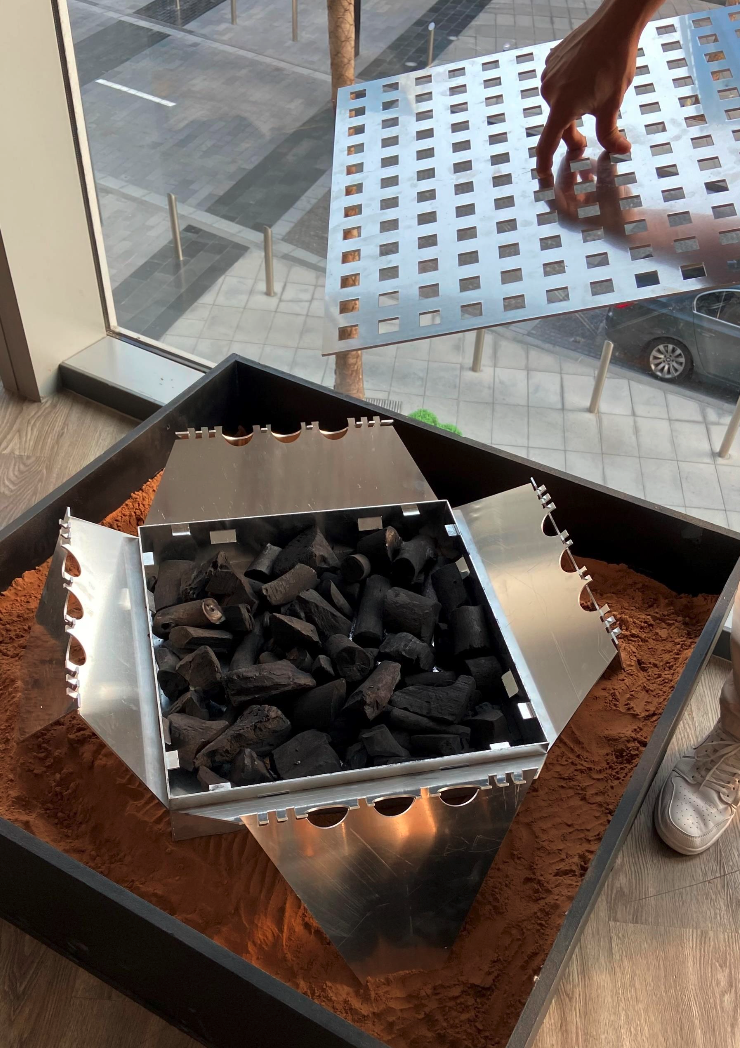
- Oven 80°C · 20 minutes Low and slow. Higher temps cracked the surface.
A group project at DIDI with Safa Fathima and Shahd Elkarmalawy. I worked on the mould fabrication, the cooking-device structure, and the iteration of the cutlery shapes.
The moulds
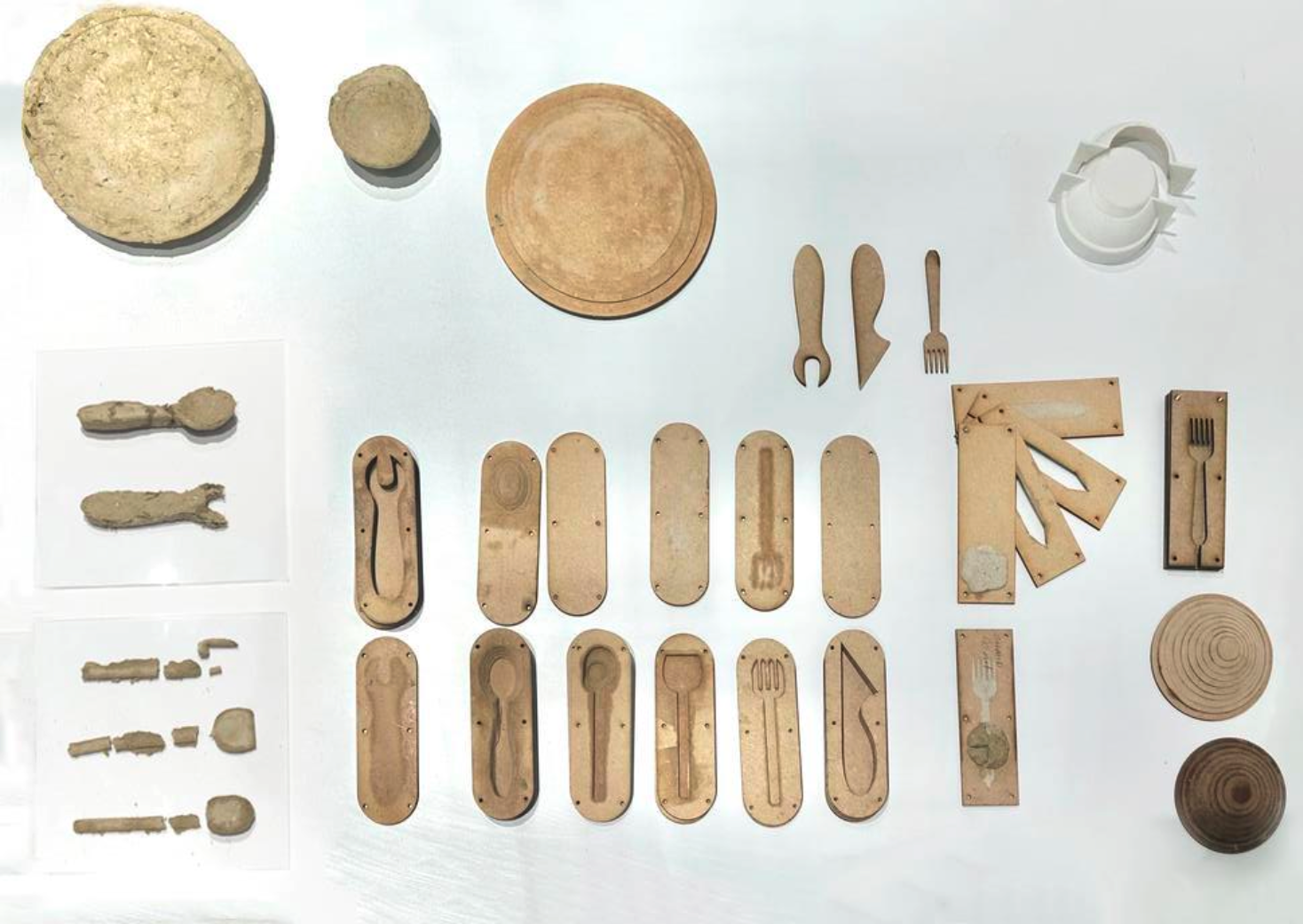
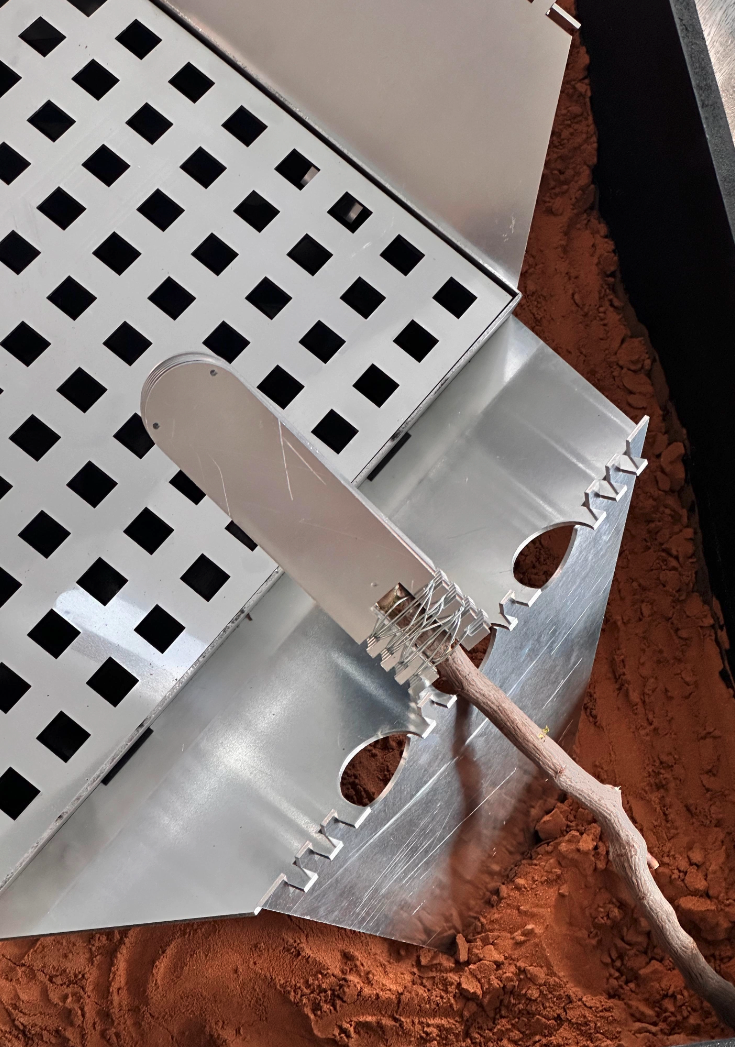
The recipe was only half the work. To turn paste into tableware, we needed moulds that wouldn't stick, wouldn't warp, and could hold a shape under pressure without cracking the bio-composite. We went through a lot of them.
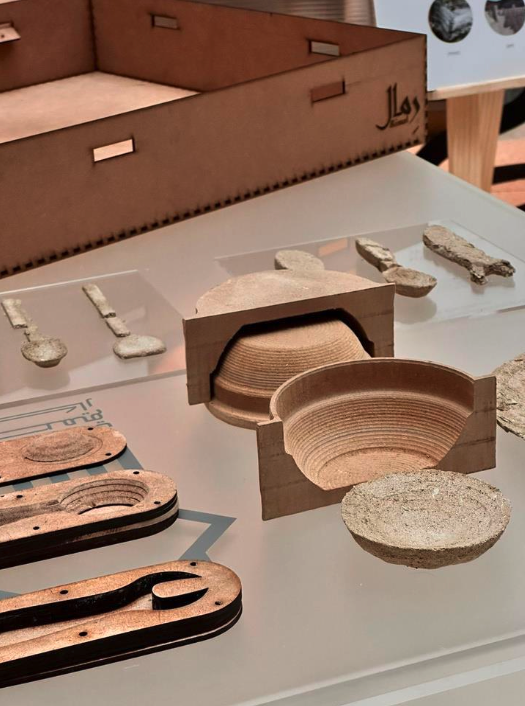
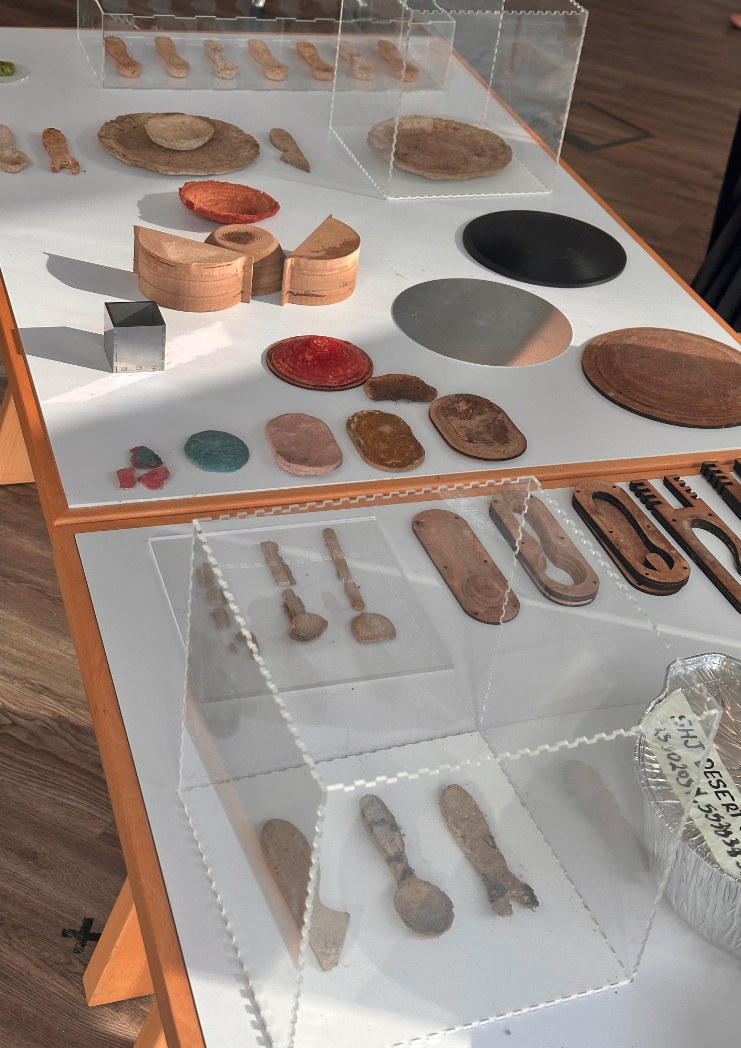
The bowls started as stacked laser-cut concentric circles in MDF. That worked, but the cut edges were rough and the bowl wall had step lines we couldn't sand out. We moved to CNC for the second and third bowl iterations and added a two-part presser so we could hollow the positive and let the inside dry faster. The plates followed the same logic with a flatter profile.
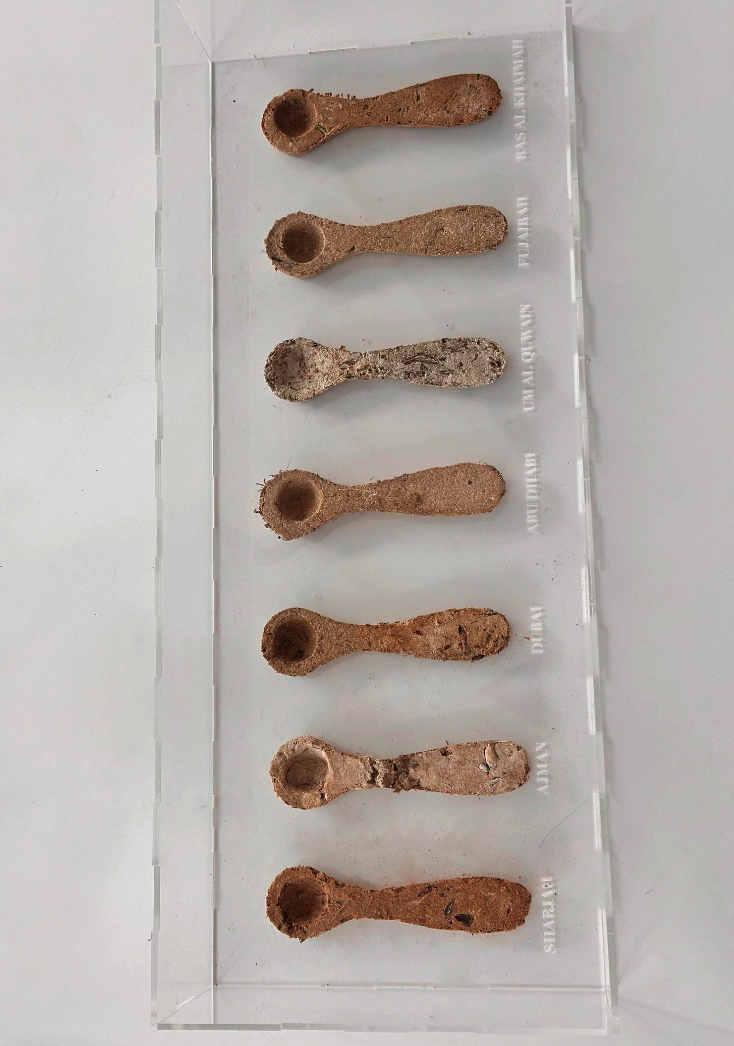
The cutlery was harder. Iteration one of the spoon came out of the mould in three pieces because the handle was a single layer deep and the bowl of the spoon was too thin. By the third try, the spoon was three layers deep, wider, more organic, and ergonomic enough to use. The fork and the knife went through their own iteration arcs for the same reason: sharp edges shatter, and thin sections snap.
What came out
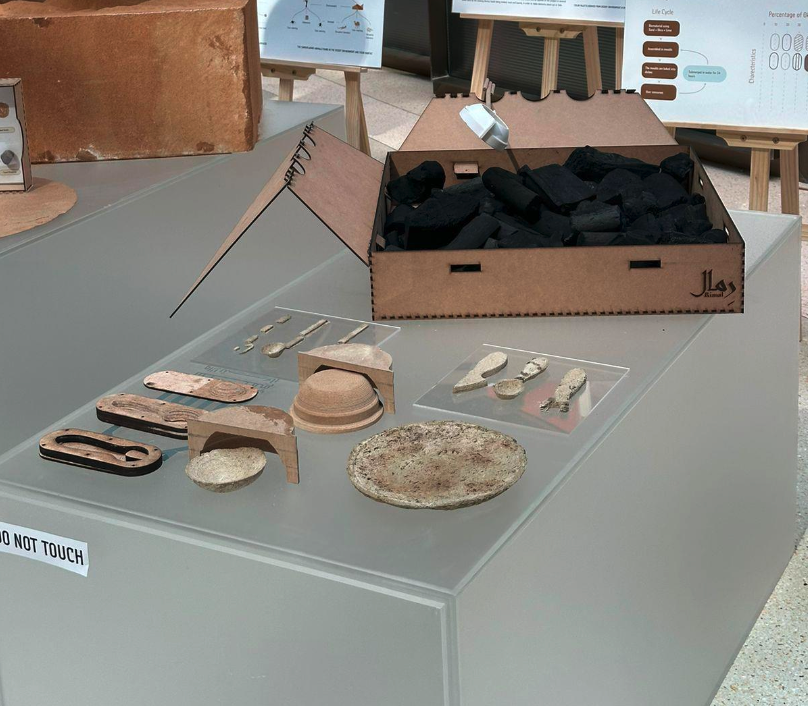
A working biomaterial recipe and a full set of tableware: a plate, a bowl, a spoon, a fork, a knife. The material has the right weight in the hand. The surface feels like sandstone, because that is essentially what it is. After use, the set crumbles back into sand under water.
The honest limits: this is a one-meal-at-a-time material at the moment. It softens with prolonged moisture, the cutlery is fragile if you're rough with it, and the cure time means the recipe isn't a substitute for what a catering company does in volume yet. The poster and process book document where it actually is, not where we're claiming it could be.